• Link to Facebook
  • Link to Instagram
  • Link to X
  • Home
  • Members
  • En Español
  • Contact
National Cancer Institute Clinical Oncology Research Program
SCOR - Southeast Clinical Oncology Research Consortium
  • Clinical Trials
  • Find a Doctor
  • About SCOR
    • Become a Member
  • Resources
    • Videos
    • Articles
    • Community Members
    • Community Support Groups
    • FAQs
    • Patient Resources
  • Menu Menu
  • Home
  • Members
  • En Español
  • Clinical Trials
  • Find a Clinical Trial Doctor
  • About SCOR
    • About SCOR
    • Become a Member of SCOR
  • Resources
    • Videos
    • News
    • Community Members
    • Community Support Groups
    • Clinical Trials FAQ
    • Clinical Trial Patient Resources
  • Contact SCOR
  • Privacy Policy
  • Site Map

Immunotherapy vs. Breast Cancer

October 14, 2019/in Breast Cancer Clinical Trial, Clinical Trial, Immunotherapy, NCI

Immunotherapy vs. Breast Cancer.  In a landmark study, a patient’s advanced breast cancer regressed completely after treatment with immune cells that recognized products of mutations specific to her cancer.
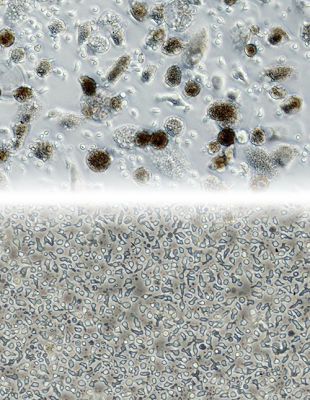
Immunotherapy vs. Breast Cancer

At the top of the image are cells isolated from a patient’s tumor directly after it was removed by surgery. The sample includes a combination of dark tumor cells, tumor-infiltrating lymphocytes (TILs) and other inflammatory cells. Below, the same culture is shown after two to three weeks of growth. This is a pure sample of TILs and is used to select lymphocytes that are able to identify the products of mutations unique to the patient’s tumor. Once multiplied, TILs are then infused into the patient. Credit: James Yang, CCR, NCI, NIH.

In an ongoing NCI-led clinical trial at the NIH Clinical Center, a patient with metastatic breast cancer has experienced complete regression of her disease after treatment with an experimental immunotherapy developed in CCR. Despite multiple prior cancer treatments, her cancer continued to enlarge and spread until she received this new treatment. The case report, published in Nature Medicine, highlights the potential of immunotherapy for difficult-to-treat solid tumors.

Although cancer immunotherapies have brought about complete regression of disease in some patients, certain types of cancer, including breast cancer, have been difficult to treat with these approaches. The experimental approach being tested in the current trial, developed by CCR Surgery Branch Chief Steven A. Rosenberg, M.D., Ph.D., and colleagues, uses immune cells selected for their ability to recognize cells with mutations specific to a patient’s tumor to fight their disease—a strategy that Rosenberg says may serve as a blueprint to treat many cancers.

This type of immunotherapy, called adoptive cell transfer (ACT), uses cancer-fighting cells from a patient’s own immune system that are grown in large numbers in the laboratory and then infused into the patient. The specific form of ACT being investigated uses immune cells that have been isolated directly from a patient’s tumor, known as tumor-infiltrating lymphocytes (TILs). The key to this approach is the identification and use of only TILs that specifically recognize proteins encoded by genetic mutations present in the patient’s cancer.

Steven A. Rosenberg, M.D., Ph.D.

Steven A. Rosenberg, M.D., Ph.D.

The TILs used to successfully treat this patient’s breast cancer were selected after researchers compared the DNA and RNA from one of her tumors to her normal tissue and identified 62 mutations unique to her cancer. Next, the TILs isolated from her tumor were tested for their ability to recognize the products of these mutations. TILs recognizing proteins encoded by four different cancer-specific mutations were then selected for treatment. Along with the tumor-specific immune cells, the patient was given pembrolizumab, an immune system checkpoint inhibitor that allows cancer-fighting cells to remain active in the microenvironment of a tumor, and interleukin-2, which promotes immune cell growth.

More than three years after the treatment, the patient’s breast cancer has not returned. The team has also seen this type of immunotherapy trigger tumor regression in patients with liver cancer, colorectal cancer and cervical cancer, offering hope that it might be a broadly effective treatment strategy.

Selected References

Zacharakis N, et al. Nat Med. 2018 Jun;24(6):724-730.

Share this entry
  • Share on Facebook
  • Share on X
  • Share on Pinterest
  • Share on LinkedIn
  • Share by Mail
https://southeastclinicaloncology.org/wp-content/uploads/2018/06/SCOR-Southeast-Clinical-Oncology-Research_Logo.png 0 0 BCeditor https://southeastclinicaloncology.org/wp-content/uploads/2018/06/SCOR-Southeast-Clinical-Oncology-Research_Logo.png BCeditor2019-10-14 09:17:452019-10-14 09:20:37Immunotherapy vs. Breast Cancer
You might also like
Patient receiving cancer vaccine Immunotherapy to Treat Cancer
Patient receiving cancer vaccine Triple-Negative Breast Cancer: Sharon’s Clinical Trial Profile
Patient receiving cancer vaccine Clinical trial evaluates T-cell therapy for advanced mesothelin-expressing cancers
immunotherapy cancer research Immunotherapy to Treat Cancer
Patient receiving cancer vaccine What are Cancer Vaccines?
Patient receiving cancer vaccine TMIST Ramps Up to Illuminate Breast Cancer Screening
Patient receiving cancer vaccine FirstHealth joins National Breast Cancer Awareness Month
Patient receiving cancer vaccine For Women with Breast Cancer, Regular Exercise May Improve Survival

A program of the National Cancer Institute of the National Institutes of Health

Community Resources

FAQ's

Participating SCOR Members

  • Cary, NC
  • Charleston, SC
  • Charlotte, NC
  • Chesapeake, VA
  • Florence, SC
  • Fort Myers, FL
  • Gastonia, NC
  • Goldsboro, NC
  • Greensboro, NC
  • Hendersonville, NC – Pardee
  • Hendersonville, NC – Advent Health
  • Kingsport, TN
  • Martinsville, VA
  • New Bern, NC
  • Pinehurst, NC
  • Richmond, VA
  • Rocky Mount, NC
  • Savannah, GA
  • Wilmington, NC
  • Winston Salem, NC

Contact SCOR

Southeast Clinical Oncology
Research Consortium

2150 Country Club Road,
Suite 200
Winston Salem, NC 27104
T: (336) 448-1417
F: (336) 448-1425

Member Communities

Cary, NC
Charleston, SC
Charlotte, NC
Chesapeake, VA
Florence, SC
Fort Myers, FL
Gastonia, NC
Goldsboro, NC
Greensboro, NC
Hendersonville, NC – Pardee
Hendersonville, NC – AdventHealth
Kingsport, TN
Martinsville, VA
New Bern, NC
Pinehurst, NC
Richmond, VA
Rocky Mount, NC
Savannah, GA
Syracuse, NY
Wilmington, NC
Winston-Salem, NC

National Cancer Institute Clinical Oncology Research Program, Grant #5UG1CA-189858. All content © Southeast Clinical Oncology Research Consortium. All rights reserved. 2150 Country Club Road, Suite 200, Winston-Salem, NC 27104-4241 | Phone: (336) 448-1417 | Fax: (336) 448-1425 | Site Map | Privacy Policy | Website Design by Built Creative.
  • Link to Facebook
  • Link to Instagram
  • Link to X
Link to: FirstHealth joins National Breast Cancer Awareness Month Link to: FirstHealth joins National Breast Cancer Awareness Month FirstHealth joins National Breast Cancer Awareness Month Link to: Cancer Clinical Trials Close to Home at Lee Memorial Health System Link to: Cancer Clinical Trials Close to Home at Lee Memorial Health System Cancer Clinical Trials Close to Home at Lee Memorial Health System
Scroll to top Scroll to top Scroll to top